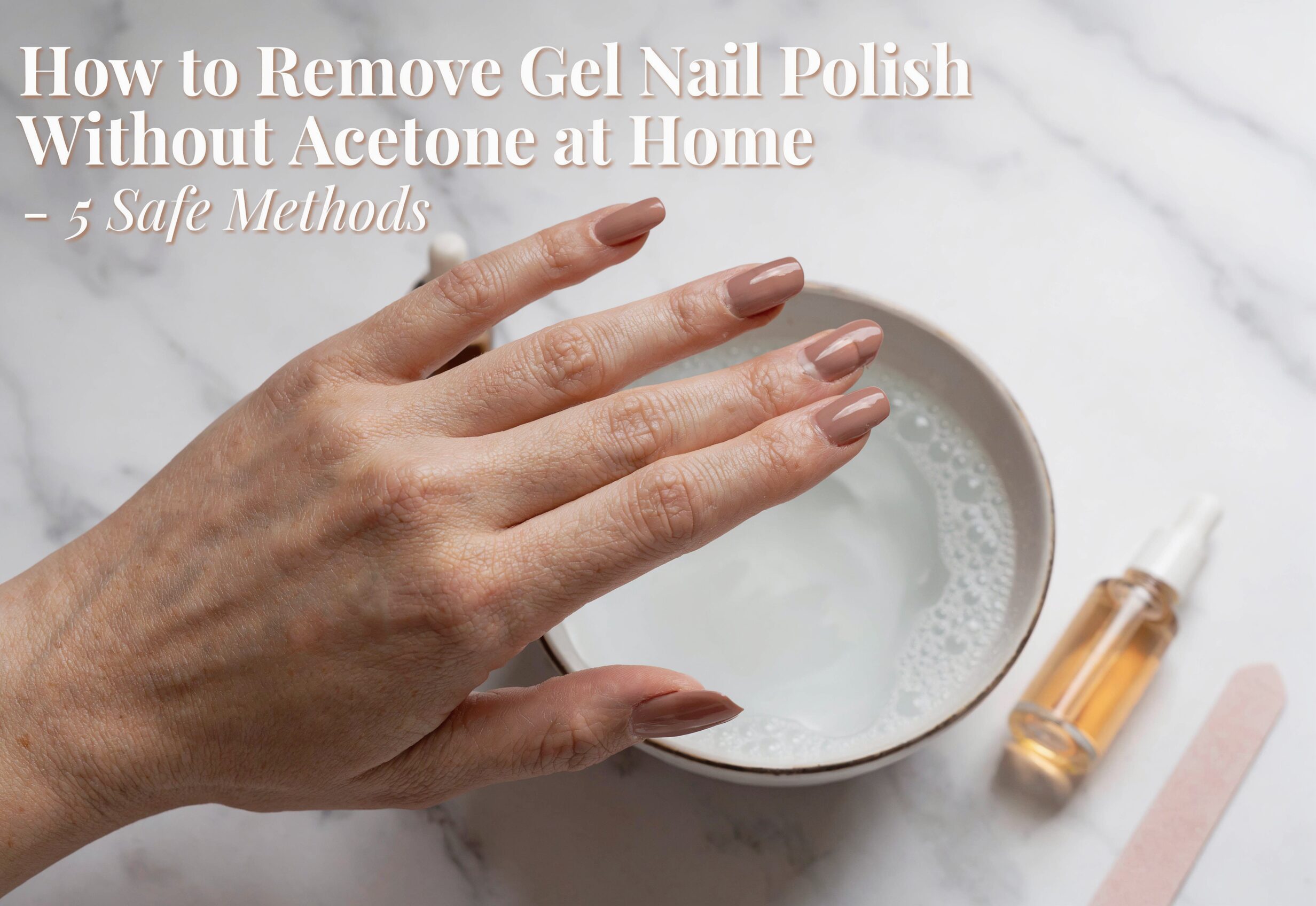
If you want to remove gel nail polish without acetone at home, you probably already know how harsh acetone can be on your nails and skin.
Acetone works fast. But it also strips moisture, dries out cuticles, and can leave nails feeling thin and rough.
The good news is that there are gentler alternatives. They take a little more patience, but they protect your natural nails much better.
In this guide, you’ll learn 5 safe ways to remove gel nail polish without acetone at home — step by step.
Why Avoid Acetone for Gel Removal?
Acetone is the standard method for gel removal. It dissolves the gel bond quickly.
But it also comes with downsides:
- strips natural oils from the nail plate
- dries out cuticles and surrounding skin
- can make nails feel thin and brittle after use
- repeated use weakens the nail over time
- can cause skin irritation for sensitive people
If your nails are already dry, weak, or recovering from damage, using acetone makes things worse.
That’s why learning how to remove gel nail polish without acetone at home is worth the extra effort.
Important: What You Should Never Do
Before we get into the methods, one rule matters more than anything:
Never peel, pull, or force gel polish off your nails.
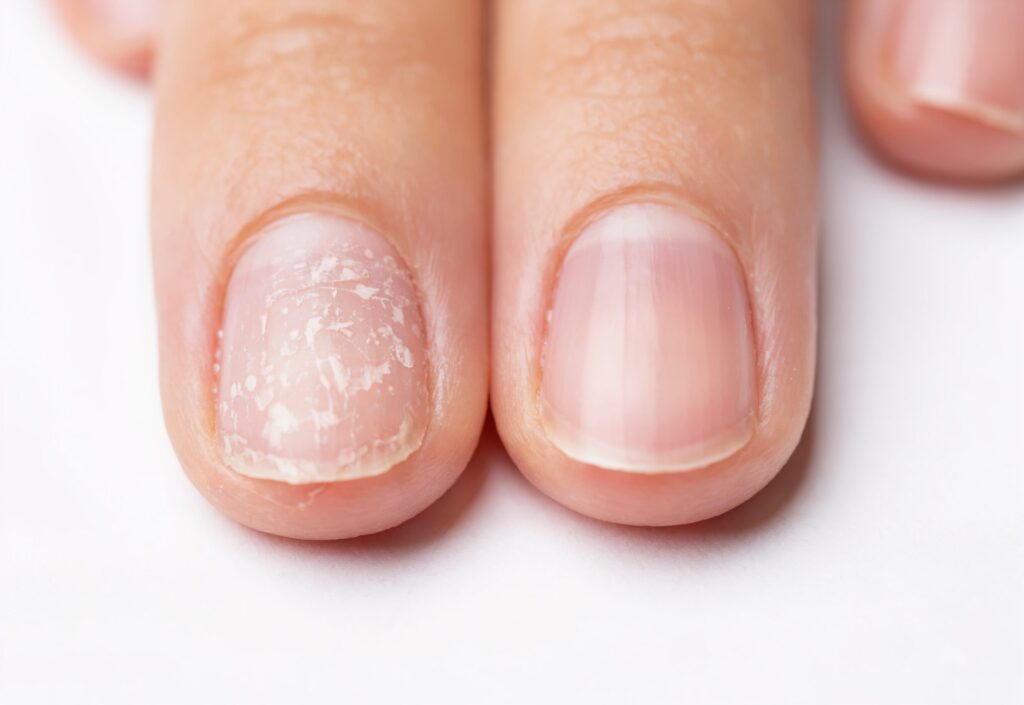
Peeling gel removes layers of your natural nail plate. This causes:
- thin, flexible nails
- white patches
- peeling and splitting
- increased risk of breakage
No matter which removal method you use, if the gel doesn’t come off easily, it needs more time to soften. Be patient.
5 Safe Methods to Remove Gel Nail Polish Without Acetone at Home
Each method works differently. Choose the one that fits your situation best.
Method 1: Warm Soapy Water Soak
This is the gentlest option. It works best on gel polish that’s already starting to lift slightly at the edges.
What you need:
- Small bowl
- Warm water
- Dish soap
- Cuticle pusher or orangewood stick
How to do it:
Fill a small bowl with warm water and add a few drops of dish soap. Soak your fingertips for 20–30 minutes. The warm water slowly loosens the gel bond.
After soaking, try gently sliding a cuticle pusher under the lifted edge. If the gel doesn’t move easily, soak for another 10 minutes.
- Work slowly from the sides
- Don’t force any part that resists
- Re-soak if needed
This method takes the longest but causes the least damage.
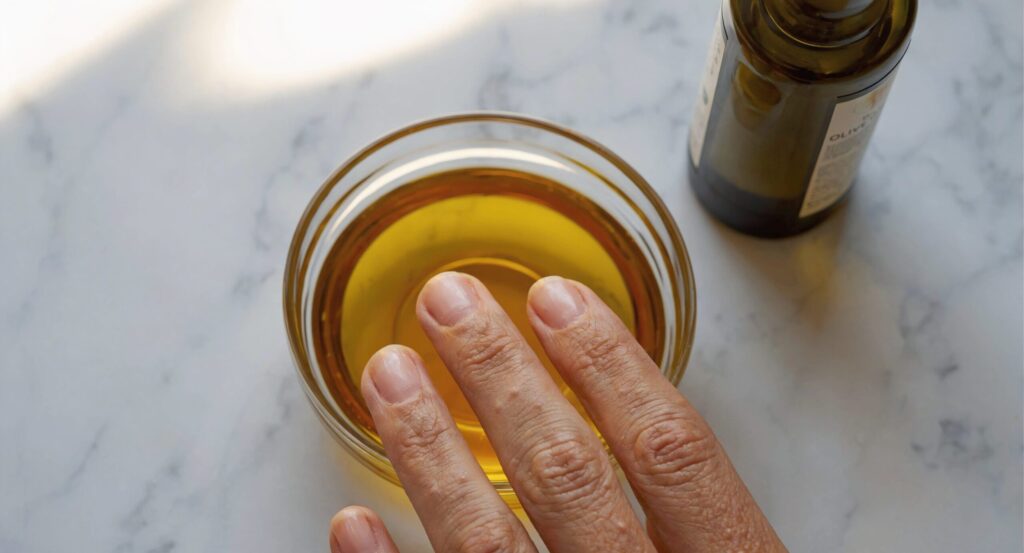
Method 2: Oil Soak Method
Oil breaks down gel adhesive gradually while also moisturizing your nails during the process.
What you need:
- Small bowl
- Olive oil, coconut oil, or cuticle oil
- Cuticle pusher or orangewood stick
How to do it:
Warm the oil slightly and pour it into a small bowl. Soak your fingertips for 20–30 minutes.
The oil penetrates under the gel edges and weakens the bond.
- Gently push the gel from the sides after soaking
- If it resists, soak longer
- This method also hydrates your cuticles and nails
This is a great option if your nails are already dry or damaged.
Method 3: Non-Acetone Nail Polish Remover
Non-acetone removers contain gentler solvents like ethyl acetate. They work slower than acetone but are much less harsh on nails.
What you need:
- Non-acetone nail polish remover
- Cotton pads
- Aluminum foil or nail clips
- Nail file (180 grit)
- Cuticle pusher
How to do it:
Start by gently filing the shiny top coat off each nail. This lets the remover penetrate the gel layers.
Soak cotton pads in non-acetone remover and place them on each nail. Wrap with foil or use nail clips to hold them in place.
Wait 25–30 minutes. Non-acetone remover takes longer than pure acetone.
After soaking, gently push the softened gel off with a cuticle pusher.
- File only the top layer — not down to your natural nail
- Be patient with the longer soak time
- Re-wrap any nails where gel hasn’t fully softened
Method 4: Steam Method
Steam softens gel polish by using heat and moisture together. This method is gentle and doesn’t require any chemicals.
What you need:
- A pot of hot water
- A towel
- Cuticle pusher or orangewood stick
- Cuticle oil
How to do it:
Boil water and pour it into a heat-safe bowl. Hold your hands over the steam (not in the water) and drape a towel over your hands to trap the steam.
Steam for 10–15 minutes. The heat and moisture soften the gel bond.
After steaming, gently try to push the gel off with a cuticle stick.
- Keep your hands at a comfortable distance from the water
- Don’t burn yourself — the steam should feel warm, not painful
- This works best when combined with a light file of the top coat first

Method 5: Gel Polish Remover Wraps (Acetone-Free)
Several brands now sell pre-soaked, acetone-free gel remover wraps. These are convenient and designed specifically for gentle gel removal.
What you need:
- Acetone-free gel remover wraps
- Nail file (180 grit)
- Cuticle pusher
How to do it:
File the top coat lightly. Open one wrap and place it around your finger so the soaked pad sits on the nail surface.
Leave on for the time recommended on the package — usually 15–25 minutes.
Remove the wrap and gently push off the softened gel.
- Follow the brand’s instructions for timing
- Don’t leave wraps on longer than recommended
- These are great for travel or quick removal
What to Do After Removing Gel Polish
After you remove gel nail polish without acetone at home, your nails need some recovery care.
Hydrate Immediately
Gel removal — even without acetone — can leave nails feeling dry.
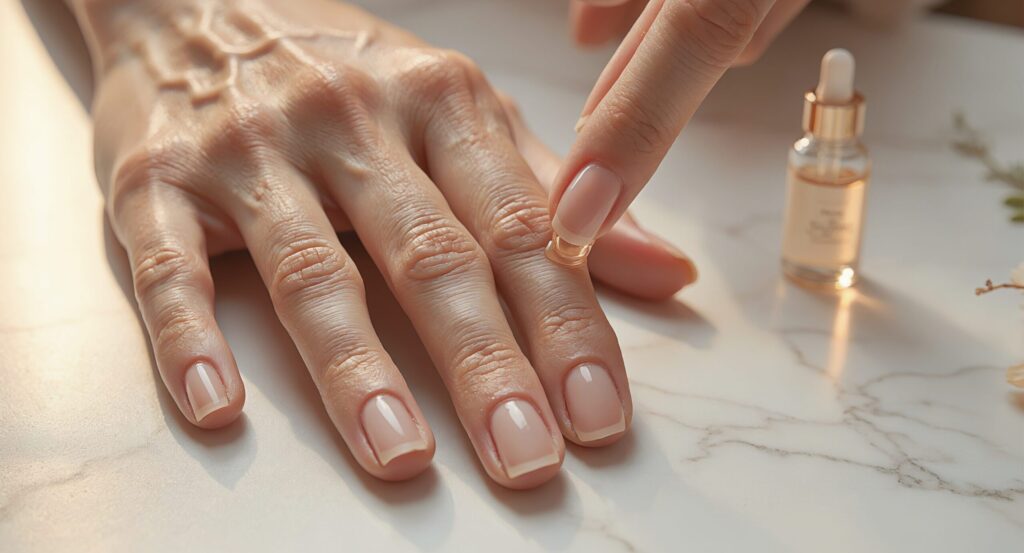
- Apply cuticle oil to all nails right away
- Massage for 20–30 seconds per nail
- Follow with hand cream
If your cuticles feel especially rough, read how to treat extremely dry cuticles at home.
Buff Gently If Needed
If there’s minor residue or rough texture after removal, a light buff can help.
- Use a fine buffer only
- One or two passes maximum
- Don’t over-buff — it thins the nail
Give Your Nails a Break
Let your nails rest for a few days before applying anything new.
- Keep nails bare or use a strengthening base coat
- Apply cuticle oil daily
- Avoid heavy manicures for at least a week
Check for Damage
Look at your nails after removal for any signs of trouble.
- White spots usually grow out on their own
- Peeling may need extra moisture and care
- If nails feel very thin, consider using a nail strengthener
If your nails are peeling after removal, read how to fix peeling nails after gel polish.
If you notice ridges, check what causes ridges in fingernails and how to fix them.
Common Mistakes During Gel Removal
Even when you remove gel nail polish without acetone at home, mistakes can still cause damage.
Peeling the Gel Off
This is always the worst mistake.
- Never peel, no matter how tempting
- If gel is lifting, soak it — don’t pull it
Not Filing the Top Coat First
The top coat seals the gel. Without breaking that seal, no soak method will work efficiently.
- Always file the shiny surface lightly first
- This allows any liquid or steam to reach the gel underneath
Rushing the Soak Time
Non-acetone methods take longer. Cutting the time short means the gel won’t soften enough.
- Be patient
- Set a timer and wait
- Re-soak if the gel still feels stuck
Using Metal Tools Aggressively
Scraping with metal tools can gouge the natural nail surface.
- Use a wooden orangewood stick when possible
- Apply gentle pressure only
- Stop and re-soak if you feel resistance
Skipping Aftercare
Not moisturizing after removal leaves nails vulnerable.
- Cuticle oil is essential after every removal
- Hand cream helps restore moisture
- Don’t skip this step
Nail Ideas for After Recovery
Once your nails recover from gel removal, try these gentle looks:
- Simple Short Summer Nail Ideas 2026
- Daisy Nail Art Designs
- Back to School Nails 2026
- First Day of School Nail Ideas 2026
If you want to explore other nail options after recovery:
- Builder gel for natural nails for added strength
- Press-on nail sizing guide for beginners for easy application
- Remove press-on nails without damage for safe removal
Frequently Asked Questions
Can you remove gel nail polish without acetone at home?
Yes. You can remove gel nail polish without acetone at home using warm soapy water, oil soaks, non-acetone remover, steam, or acetone-free remover wraps.
What is the safest way to remove gel nail polish without acetone?
The oil soak method and warm water method are the gentlest options. They take longer but cause the least damage to natural nails.
How long does it take to remove gel polish without acetone?
Most acetone-free methods take 20–30 minutes, compared to 15–20 minutes with acetone. Be patient and don’t rush the process.
Does non-acetone remover work on gel polish?
Yes, but it works slower than pure acetone. You need to file the top coat first and soak for a longer time.
Can I use coconut oil to remove gel polish?
Coconut oil can help loosen gel polish, especially if it’s already starting to lift. Soak for 20–30 minutes and gently push the softened gel off.
Will removing gel without acetone damage my nails?
If done correctly and patiently, acetone-free removal is actually less damaging than acetone removal because it preserves more natural moisture in the nail plate.
How can I strengthen my nails after gel removal?
Use cuticle oil daily, apply a nail strengthener, eat protein-rich foods, and give your nails a break from heavy products for 1–2 weeks.
Final Thoughts
Learning how to remove gel nail polish without acetone at home is a smart choice for anyone who wants to protect their natural nails from unnecessary drying and damage.
It takes a little more patience than acetone. But your nails will feel healthier, stronger, and less brittle afterward.
Choose the method that fits your situation, be gentle, and always moisturize after removal. Your nails will thank you.
For more nail care guides and trending ideas, visit Latest Nail Ideas.