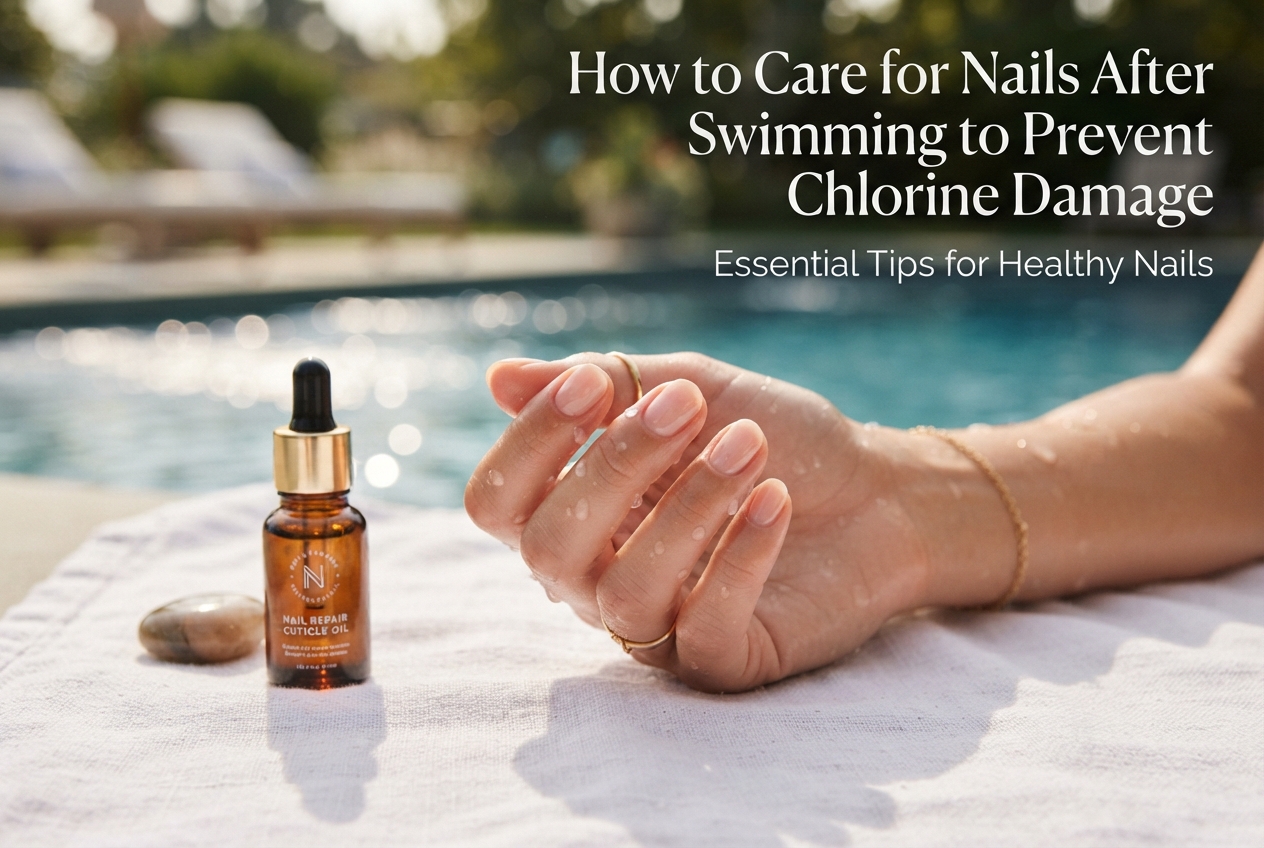
If you spend time in the pool every summer and notice your nails becoming soft, weak, and peeling by August, chlorine is almost certainly the cause.
Knowing how to care for nails after swimming is one of the most underrated summer nail care skills. Most people simply dry off and move on. But what happens to your nails in the minutes and hours after swimming determines whether they stay strong or start breaking.
In this guide, I’ll show you exactly how to care for nails after swimming, why chlorine is so damaging, and what habits will protect your nails all summer long.
What Does Chlorine Actually Do to Your Nails?
Chlorine is added to pools to kill bacteria. It does its job well. But it is also a powerful chemical that strips oils from everything it touches — including your skin, hair, and nails.
When you swim, your nails absorb pool water and swell up. When they dry, they shrink back down. This repeated swelling and shrinking weakens the nail plate layer by layer.
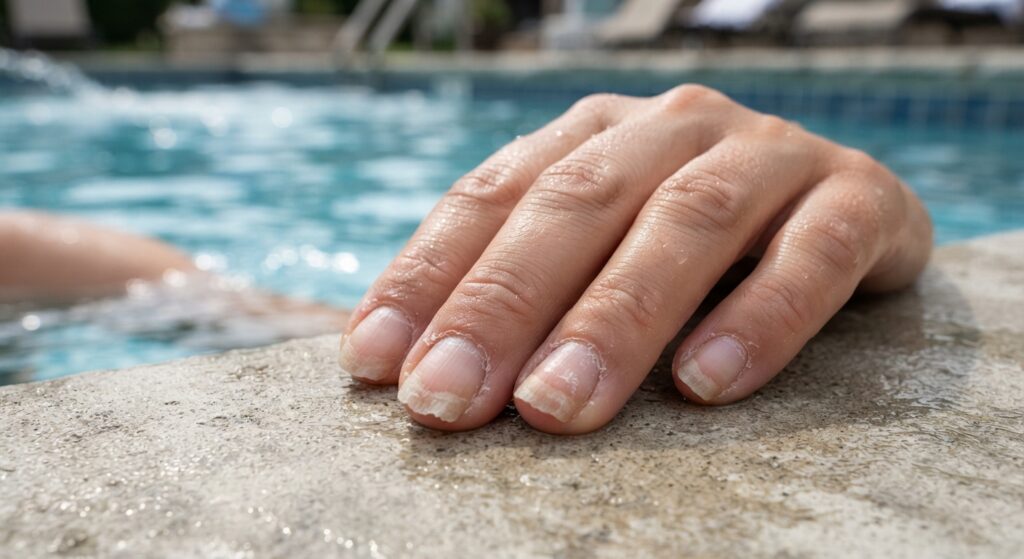
At the same time, chlorine strips the natural lipids (oils) from the nail plate. These lipids are what give your nails their flexibility and strength. Without them, nails become:
- soft and bendy when wet
- brittle and rigid when dry
- prone to peeling in thin layers
- more likely to break at the tips
- dry and white-looking at the free edge
If you also wear gel or acrylics during summer, the effect is even worse — the lifting you see at the edges is often chlorine breaking down the adhesive bond from underneath.
Signs Your Nails Are Chlorine Damaged
Here is how to tell if your swimming habit is hurting your nails:
- Nails feel soft and rubbery immediately after swimming
- Nail polish chips faster than usual
- White patches or lines forming across the nail plate
- Cuticles are dry, cracked, or peeling
- Nails peel in thin transparent layers
- The free edge tears instead of breaking cleanly
If any of these sound familiar, your nails need both immediate aftercare and a longer-term recovery plan.
How to Care for Nails After Swimming: Step-by-Step
This is the most important part of the guide. What you do in the first 30 minutes after getting out of the pool determines how much damage your nails absorb.
Step 1: Rinse with Fresh Water Immediately
The moment you get out of the pool, rinse your hands under fresh, clean water.
- Use cool or lukewarm water, not hot
- This dilutes and washes away the chlorine sitting on your nails and skin
- Don’t scrub — just rinse gently for 20–30 seconds
This single step alone reduces a significant amount of chemical exposure.
Step 2: Dry Your Hands Gently
Pat your hands dry with a soft towel. Don’t rub or shake your hands aggressively.
- Your nails are at their softest and most vulnerable right after swimming
- Rubbing creates friction that can stress already-weakened nail layers
- Pat gently until hands are fully dry
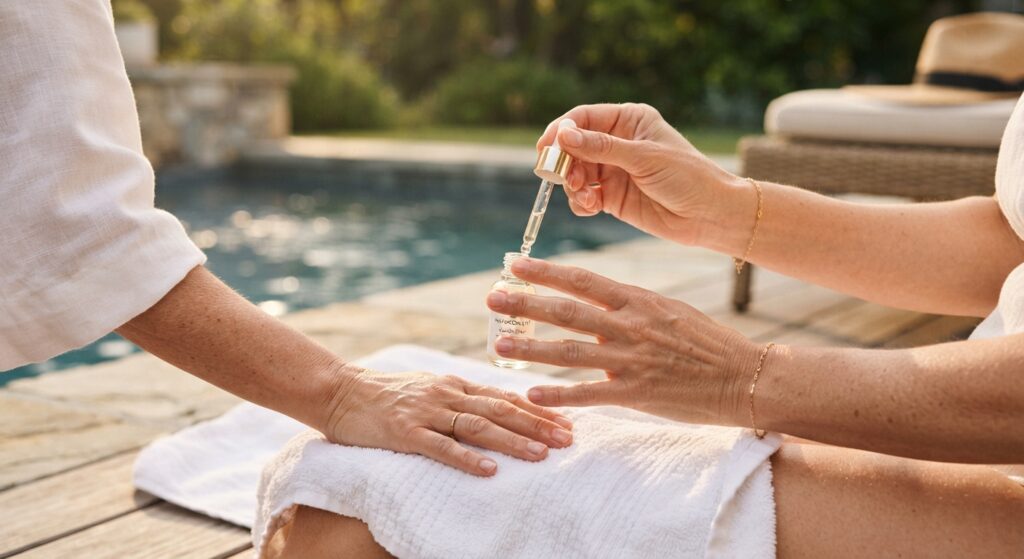
Step 3: Apply Cuticle Oil Within 5 Minutes
This is the most critical step in knowing how to care for nails after swimming.
Chlorine has just stripped all the natural oils from your nail plate. You need to replace them before the nail dries out completely and starts peeling.
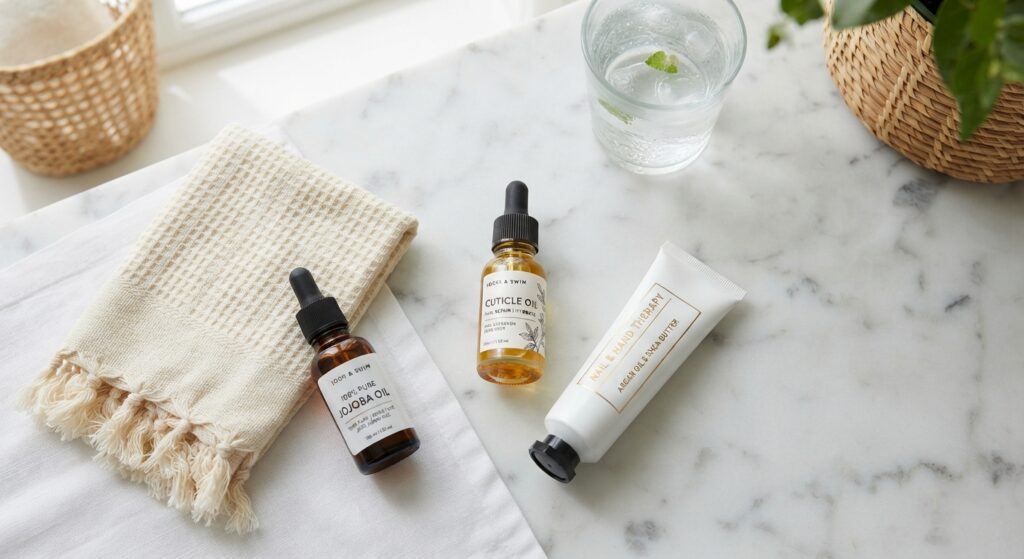
- Apply 1–2 drops of cuticle oil to each nail
- Massage it into the cuticle and nail surface
- Focus on the free edge (the tip) which takes the most damage
- Use oils with jojoba, vitamin E, or argan oil for the fastest absorption
For the best product options, read best cuticle oil for damaged nails.
Step 4: Apply a Rich Hand Cream
After the cuticle oil has absorbed for 2–3 minutes, seal everything in with a hand cream.
- Choose a cream with shea butter, glycerin, or ceramides
- Apply generously to the hands and nails
- Don’t rinse off — let it absorb naturally
Step 5: Avoid Hot Showers Immediately After Swimming
If possible, wait at least 20–30 minutes before showering after the pool.
Hot water removes the oils you just applied and causes the nails to swell and shrink again — adding to the damage cycle.
If you need to shower, use cool or lukewarm water and reapply cuticle oil afterward.
Before You Swim: Protective Habits
Learning how to care for nails after swimming starts before you even get in the water. These pre-swim habits make a huge difference.
Apply Cuticle Oil Before Swimming
This sounds counterintuitive, but applying a thick layer of cuticle oil before entering the pool creates a protective barrier over your nail plate.
- The oil forms a temporary shield between your nail and the chlorinated water
- It slows down how much chlorine and water the nail absorbs
- Use a thick, natural oil like coconut or avocado oil for maximum protection
Apply a Clear Base Coat or Top Coat
If you are wearing nail polish, make sure you have a fresh, uncracked layer of top coat before swimming.
- The top coat acts as a physical barrier
- Reapply top coat the evening before swimming days
- Chipped or old top coat lets chlorine access the nail plate directly
Keep Nails Short
Long nails break more easily when they are soft and waterlogged.
- Keep nails at a short, manageable length during peak swimming season
- This dramatically reduces breakage risk
- After your nails are healthy and strong, you can grow them out again
Wear Swim Gloves (For Serious Protection)
If you swim very frequently — like several times a week for training — consider waterproof swim gloves for some sessions.
They look a little unusual but completely prevent chlorine from touching your nails at all.
Rebuilding Damaged Nails After Chlorine Exposure
If your nails are already damaged from the summer, you need a recovery plan, not just aftercare.
Topical Recovery
For daily topical care, follow a consistent nail care routine for natural nails that includes:
- Cuticle oil twice daily
- Weekly warm oil soaks
- A nail strengthener applied every 2–3 days
If your nails are splitting at the tips, check nails splitting down the middle.
If you have ridges forming, read what causes ridges in fingernails and how to fix them.
Internal Recovery
Here is what most people overlook: chlorine damage speeds up faster than topical oil can repair it if your nails are already nutritionally deficient.
If you swim regularly and your nails keep getting worse despite daily oiling, your nail matrix may not be producing strong enough new growth to keep up with the damage.
In this case, adding a targeted nail health and recovery formula to your daily routine can help. It supports the nail matrix from within, giving it the nutrients it needs to grow out stronger, thicker replacement nails faster — which is exactly what you need when chlorine is constantly attacking the surface.
Give Your Nails Polish-Free Days
Let your nails breathe between manicures. Polish-free days allow the nail plate to absorb oil better and show you how healthy (or not) your natural nails actually are.
Common Mistakes Swimmers Make with Their Nails
Even people who know about nail care make these mistakes during summer swimming season.
Waiting Too Long to Moisturize
The window for effective aftercare is the first 10–15 minutes after getting out of the pool. After that, the nail has dried out completely and the damage is already set.
- Keep cuticle oil in your pool bag
- Apply it before you even grab your towel
Picking at Peeling Nails by the Pool
When nails peel from chlorine damage, it is tempting to pick at the loose edges. By the pool, this is even more tempting because the nail is soft and peels easily.
- Never pick or peel
- Trim peeling edges with clean scissors
- Apply oil immediately after trimming
Getting Gel or Acrylics Right Before Swimming Season
If you know you’ll be swimming frequently, getting a full set of gel or acrylics right before pool season is a bad idea.
- Chlorine gets under lifting edges and destroys the bond
- Removal afterward causes more damage to already-weakened nails
- Consider press-ons instead — read how to make press on nails last longer for summer manicure tips
Using Harsh Removers Mid-Summer
If you change your nail polish frequently during summer, using acetone remover repeatedly dries nails out on top of the chlorine damage.
- Use acetone-free remover during swimming season
- Limit polish changes to once a week maximum
- Always reapply cuticle oil after any removal
Nail Ideas That Look Great for Summer Swimming Days
Heading to the pool or beach? These nail looks are low-maintenance and hold up beautifully in summer:
- Dreamy Lake Nails 2026
- Simple Short Summer Nail Ideas 2026
- Polka Dot Nail Ideas 2026
- Simple Summer Nails 2026
- Best Summer Vacation Nails 2026
Frequently Asked Questions
How do I care for my nails after swimming?
Rinse with fresh water immediately after the pool, pat dry gently, and apply cuticle oil within 5 minutes. Follow with a rich hand cream. Repeat this every time you swim.
Does chlorine damage nails permanently?
No. Chlorine damage is not permanent. With consistent aftercare and a recovery routine, your natural nails will grow back healthy within a few weeks. However, ongoing exposure without care will keep the damage cycle repeating.
Can I wear nail polish while swimming?
Yes, but make sure you have a fresh, sealed top coat before entering the pool. Chipped or cracked polish lets chlorine access the nail plate directly, speeding up damage.
How do I protect my gel nails in the pool?
Apply a fresh layer of top coat before swimming. Avoid prolonged pool exposure if possible. After swimming, rinse and dry the nails thoroughly and reapply cuticle oil around the edges to prevent lifting.
Why do my nails feel soft after swimming?
Nails absorb water during swimming and temporarily swell. This makes them feel soft, flexible, and rubbery. This is when they are most vulnerable to breaking and peeling — which is why immediate aftercare is so important.
What oil is best for nails after swimming?
Jojoba oil, coconut oil, argan oil, and almond oil are all excellent for post-swim nail care. They absorb quickly and replace the lipids that chlorine strips from the nail plate.
How often should I apply cuticle oil during swimming season?
During active swimming season, apply cuticle oil at least three times daily — before swimming, immediately after, and before bed. The more you swim, the more oil your nails need.
Final Thoughts
Understanding how to care for nails after swimming is the key to keeping your nails strong and healthy throughout the entire summer.
The steps are simple: rinse, dry gently, oil immediately, and seal with hand cream. Protect your nails before you swim with a pre-swim oil layer and a sealed top coat.
If your nails are already damaged from the season, give them a proper recovery routine — daily oiling, weekly soaks, and the right internal support.
Summer should be about enjoying the pool, not worrying about your nails. With the right habits, you can have both.
For more nail care guides and the latest summer nail ideas, visit Latest Nail Ideas.